Milton Hershey opened his first business selling confectionary, fruits and nuts in Philadelphia when he was 18, coinciding with the 1876 Centennial Exposition. However, he didn’t see success and went bankrupt in 1882 after his father joined his business and then left him to pay the bills. He finally got it right in 1886 when he opened a caramel factory in Lancaster, hiring 1,300 workers by 1894.
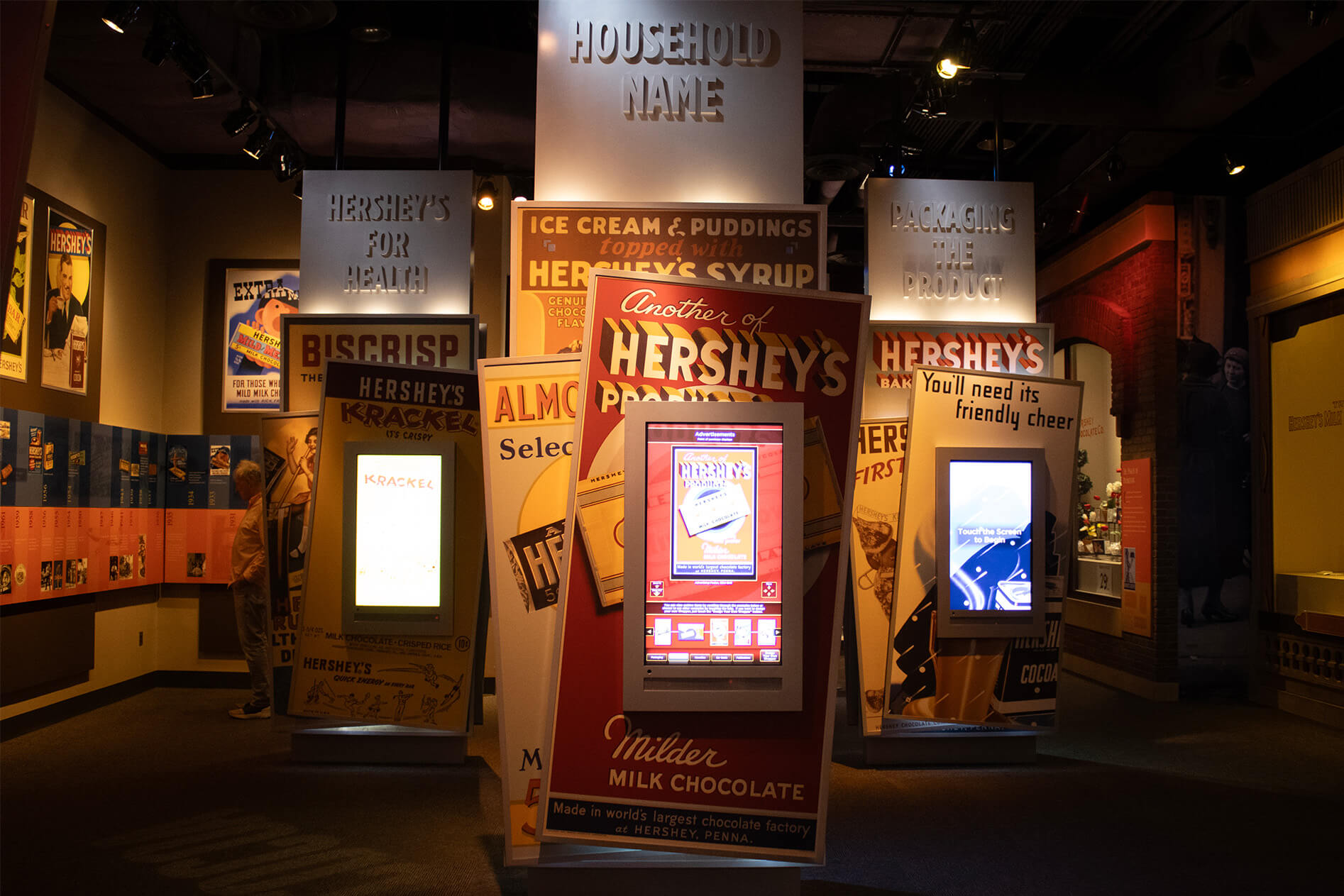
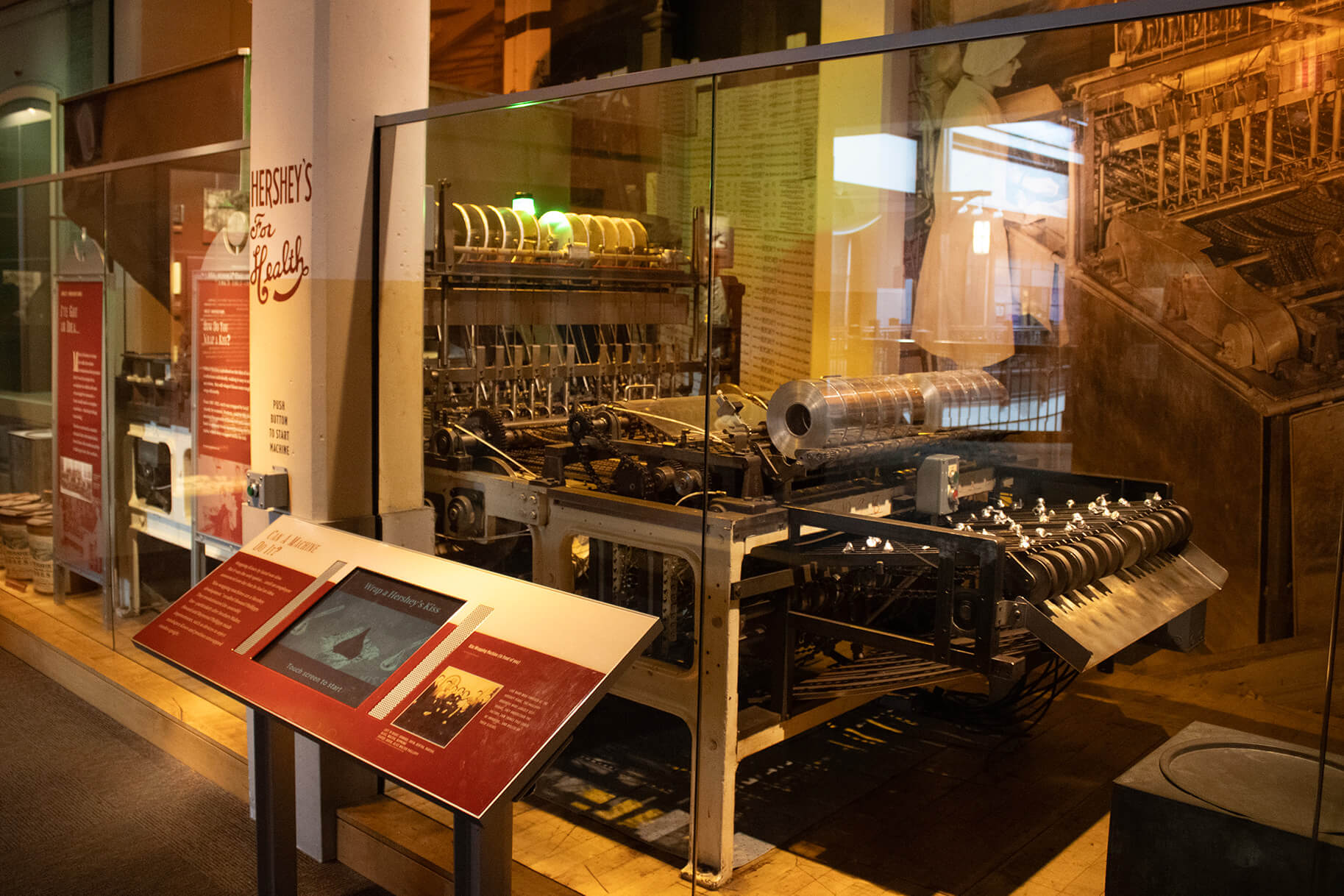
At the turn of the next century, he adopted production line approaches like Henry Ford at his Piquette Plant in Detroit to mass produce chocolate. Instead of women wrapping Kisses by hand, a machine did the work. But by 1942, production stopped for the war as aluminum foil was rationed and the factory produced chocolate bars for soldiers instead. During this time, their chocolate had to resist high temperatures and be shelf stable so butyric acid, a compound found in vomit, was added. The acid is still produced in the American milk treatment process so it tastes sour if you’re accustomed to European chocolate.
Hershey built a company town named after the company, the region had water and milk as raw materials, workers, and railroads to ship products out. Hershey even built a tram system to transport milk from nearby farms to the factory but became increasingly used by locals after the Great Depression.
The latter quarter of the main gallery is all about how much Hershey donates to medicine and education. The special gallery downstairs tells Hershey’s story in Cuba where he established a sugar cane plantation lasting until the Cuban Revolution.
Tastings are available at an extra charge. But why would I pay money to eat vomit acid?


2 Comments
Hershey’s Chocolate World – Jonathan Got · August 24, 2026 at 7:12 PM
[…] you er learned all about the company’s history at the Hershey Story Museum, it’s time to reward yourself with a trip to a chocolate theme park. Always tell the person […]
Harrisburg, PA – Jonathan Got · September 7, 2026 at 8:27 AM
[…] in the market made by Amish people, but more of them live in Lancaster’s farms, not Harrisburg. Hershey just northeast of Harrisburg is home to the legendary chocolate factory and the Civil War History […]
Comments are closed.