The best way to expect as a tourist is to buy a Muni Passport on a reloadable Clipper card that includes urban transport instead of paying $8 a ride. It’ll get you to the Cable Car Museum to learn all about the history of the practical form of transportation.
I’ve had friends tell me that there are long lines to ride the cable tram during peak tourism season. When I walked out at 8am on a regular Saturday morning, there was nobody there. Your mileage may vary.
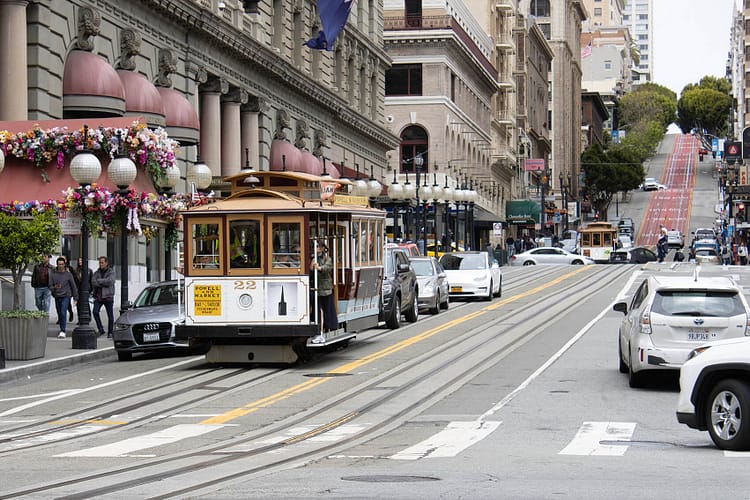
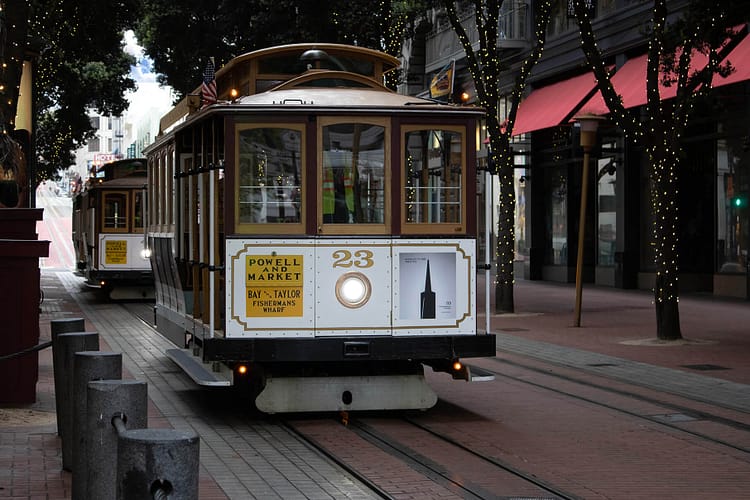
South America uses hanging cable gondolas (which is what most people outside of America call a cable car) to get over hilly terrain. San Francisco’s funicular-like cable tram system is unique in that it doesn’t rely on a counterweight on the other track to move up and down, each vehicle moves independently as it grips onto and releases itself from the constantly moving cable.
I have some reflections on this almost 150-year-old technology. I think the system can be complemented with a bicycle lift where there are no funicular lines and the trains can tack on a bicycle car like with the Stuttgart rack railway. This way, cyclists don’t need to return to where they started and can make a one way journey.
To make it not just a tourist attraction, it would also benefit from new rolling stock that automates much of the starting and stopping procedures to make it less labour-intensive. They can keep a few heritage trams running at $8, but the price is hardly affordable as everyday transportation.
America still runs on school uses that look like they were made in the 1950s, relies heavily on trucks instead of trains for last-mile delivery, and their elected officials dress in matching clothes from the 1980s. Time for an update.